
Single Visit Root Canal Treatment in Ravet, Pune
What Are Single Visit Root Canal Treatment?
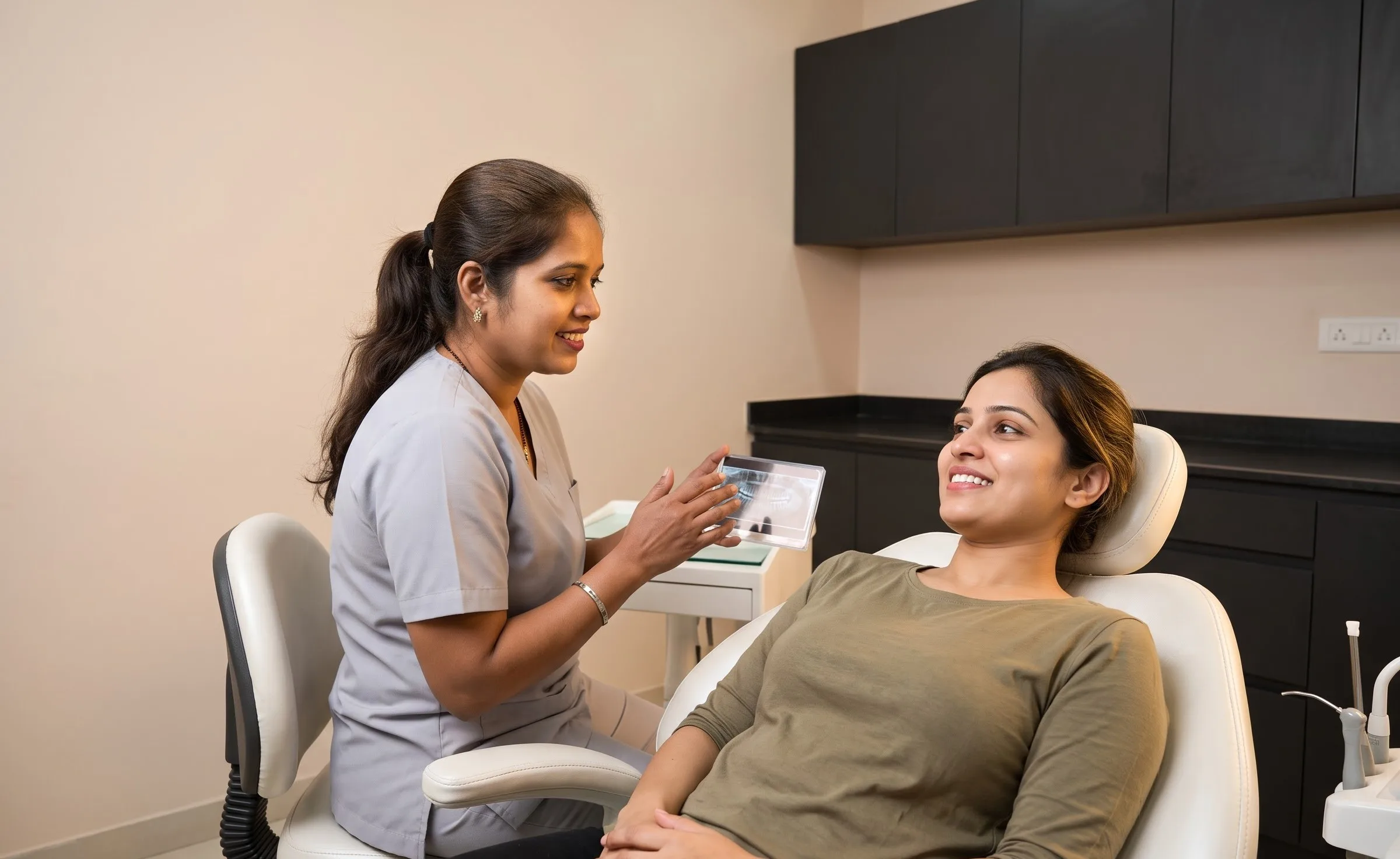
Single visit root canal treatment cleans, shapes and seals an infected or inflamed tooth in one appointment, when the case is suitable.
It can reduce the number of visits while preserving the natural tooth. Your suitability depends on the tooth, infection, anatomy and diagnosis.
- Persistent toothache
- Pain when biting or chewing
- Prolonged hot or cold sensitivity
- Deep decay reaching the pulp
When Might You Need Single Visit RCT?
A root canal may be considered when the tooth cannot heal on its own.
- Swelling around the tooth
- An abscess or dental infection
- A cracked or fractured tooth
- Darkening of a previously injured tooth
How Single Visit RCT Works
Assessment
Your tooth is examined and the diagnosis is confirmed. Imaging may be used to understand the roots and surrounding tissues.
Treatment planning
The tooth, canal anatomy and level of infection are assessed to decide whether single-visit treatment is appropriate.
Cleaning the canals
After local anaesthesia, the infected or inflamed pulp is removed and the root canals are cleaned and shaped.
Sealing the tooth
The cleaned canals are filled and sealed during the same visit when conditions allow.
Final restoration
Your tooth is assessed for its restoration needs. A filling or crown may be advised to protect it, depending on the case.
Benefits of Single Visit RCT
When clinically appropriate, completing treatment in one visit can simplify care while allowing the tooth to be cleaned, sealed and prepared for restoration.
Fewer appointments
Completing RCT in one visit can reduce the number of treatment appointments needed.
Natural tooth preservation
Root canal treatment can help retain a tooth that might otherwise need extraction.
Less disruption
One planned treatment visit may be easier to fit around work, travel or family commitments.
Thorough canal cleaning
The canals are cleaned and shaped before being sealed to help control infection.
Earlier restoration planning
Once the root canal is completed, the next step for protecting the tooth can be planned.
Specialist endodontic care
Treatment is planned by an endodontist with specialist training in Conservative Dentistry & Endodontics.

Recovery & Aftercare
Mild tenderness or sensitivity can occur after root canal treatment, particularly when the tooth was painful or infected before treatment. This usually settles as the area heals.
Follow the instructions given after treatment and avoid chewing hard foods on the treated tooth until it has been adequately restored. Take prescribed medicines only as directed. Arrange the recommended follow-up and permanent restoration, such as a crown, when advised.
Good oral hygiene and regular dental reviews help protect the treated tooth and the rest of your teeth over time.
Why Choose Aurea Advanced Dentistry?
Single-visit treatment is not simply about finishing quickly. The priority is deciding when one-visit endodontics is clinically appropriate and treating the tooth carefully.
Endodontic specialist
Dr. Kavita Rudagi is an MDS in Conservative Dentistry & Endodontics and a Diplomate of the Indian Board of Endodontics.
Diagnosis before treatment
The decision for one visit is based on the tooth's condition, anatomy, infection and treatment requirements.
Microscope-assisted care
Operating microscopy is reported as part of the clinic's endodontic treatment environment and can aid detailed visualisation.
Comfort and clear communication
The treatment approach includes patient comfort and clear communication about the procedure and next steps.