
All-on-4/6 Dental Implants in Ravet, Pune
What Are All-on-4 & All-on-6?
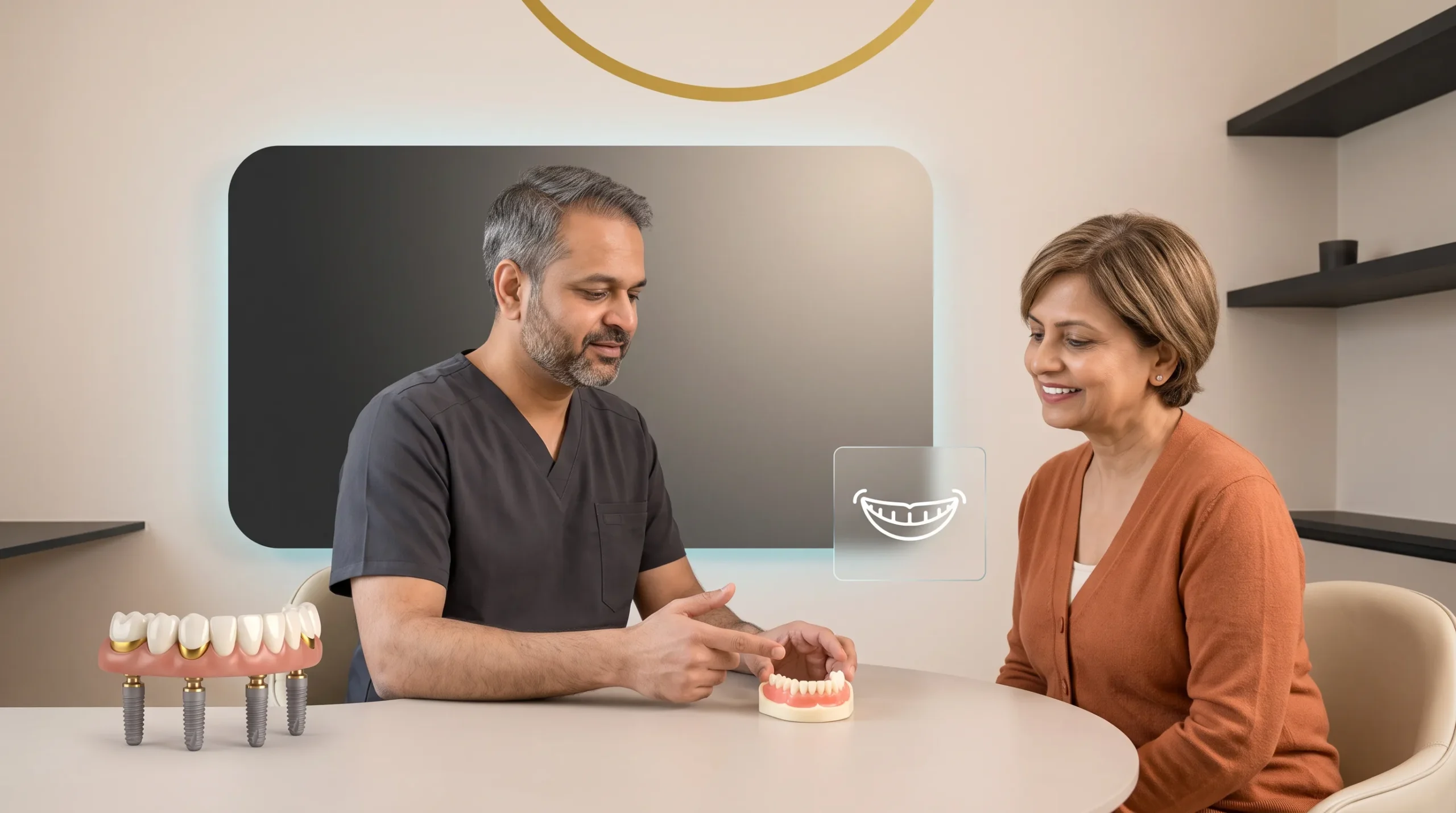
All-on-4 / All-on-6 dental implants use four or six implants to support a full arch of replacement teeth. They can be considered when many or all teeth need replacement.
The implants act as stable foundations for a fixed full-arch restoration. The number of implants and final design depend on your jawbone, bite, health and treatment plan.
- Most or all teeth are missing
- Several teeth are failing
- Loose or severely damaged teeth
- Difficulty chewing with current teeth
When Might You Need All-on-4/6 Dental Implant?
You may be a candidate when several teeth are missing, failing or difficult to restore.
- Repeated dental treatment has not helped
- Unstable removable dentures
- Advanced tooth loss affecting your bite
- Need for full-mouth tooth replacement
All-on-4/6 Dental Implant Process
Assessment
Your teeth, gums, bite and overall oral health are examined. Imaging may be advised to assess bone and plan treatment.
Treatment Planning
Your implant plan is developed around your jawbone, bite, health, smile and the type of full-arch restoration required.
Implant Placement
The planned implants are placed in the jaw. The number and position vary between patients and are decided clinically.
Healing & Restoration
As healing progresses, the implants integrate with the surrounding bone. Your fixed full-arch restoration is then planned and fitted at the appropriate stage.
Review & Maintenance
Follow-up checks assess healing, function and hygiene. Ongoing professional care helps protect the implants and restoration.
Benefits of All-on-4 & All-on-6
Fixed Support
Replacement teeth are anchored to implants rather than relying on removable denture support.
Improved Chewing
A stable full-arch restoration can make everyday eating more comfortable and functional.
A Natural-Looking Smile
The replacement teeth are designed to work with your facial appearance and bite.
Support for Daily Speech
A stable restoration may help reduce movement that can affect speech.
Full-Arch Replacement
Several missing or failing teeth can be addressed as part of one planned rehabilitation.
Planned for Your Jaw
Implant number and placement are selected according to your bone, bite and clinical needs.

Recovery & Aftercare
Some swelling, soreness or bruising can occur after implant surgery. Your symptoms depend on the extent of treatment and your individual healing response.
Follow the post-operative instructions you receive, keep the surgical area clean as advised, take prescribed medicines as directed, and attend planned reviews. Avoid smoking and other activities your surgeon advises against. Your diet may need to be modified during early healing, and the timing of your final fixed teeth will depend on implant stability and the treatment plan.
Implants need regular cleaning and professional reviews. Good daily hygiene and maintenance help protect the implants and surrounding tissues.
Why Choose Aurea Advanced Dentistry?
OMFS & Implantology Expertise
Dr. B. M. Rudagi is an Oral & Maxillofacial Surgeon and Professor & Head of OMFS & Oral Implantology at D. Y. Patil Dental College & Hospital.
Careful Surgical Planning
Treatment is planned after assessing bone, bite, oral health and the requirements of the final full-arch restoration.
A Team-Based Approach
Full-mouth rehabilitation can involve surgical and restorative considerations, with treatment decisions based on your individual clinical needs.
Safe, Comfortable Care
From strict sterilisation protocols to comprehensive aftercare, we ensure every stage of your implant journey is safe, comfortable, and stress-free.