
Dental Implants in Ravet, Pune
What Are Dental Implants?
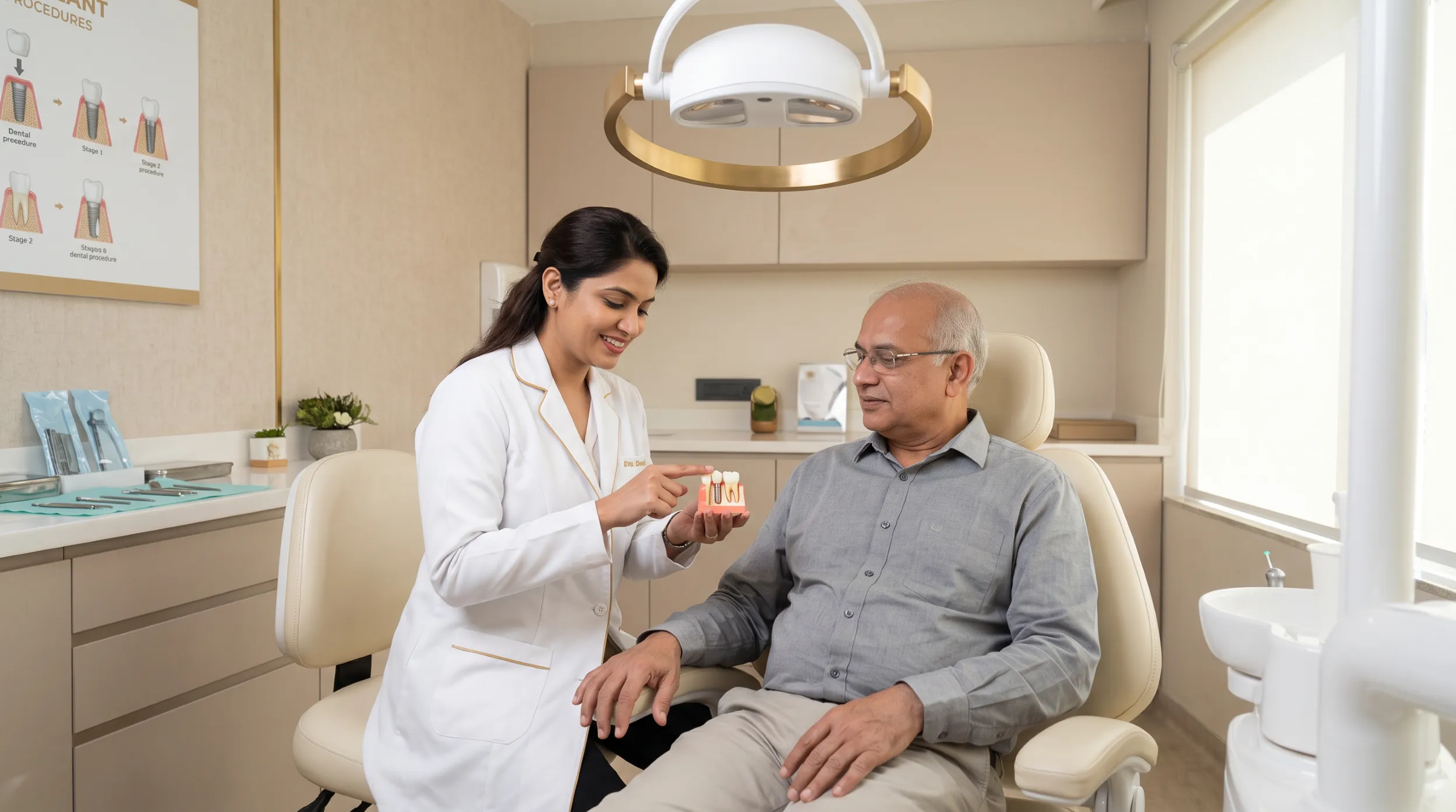
Dental implants are small fixtures placed in the jawbone to replace missing tooth roots. They can support a crown, bridge or other restoration.
They provide a stable base for replacement teeth, helping you eat and speak more comfortably while supporting a complete, natural-looking smile.
- Missing one or more teeth
- Loose or uncomfortable dentures
- Difficulty chewing or biting food
- A severely damaged or fractured tooth beyond repair
Signs You May Need Dental Implants
Implants may be considered when one or more teeth are missing or cannot be saved.
- Bone loss after tooth extraction
- Gaps affecting your smile and confidence
- Difficulty speaking due to missing teeth
- Wanting a permanent alternative to bridges or dentures
Our Dental Implant Process
Assessment & Diagnosis
We examine your teeth, gums and bite, and review available bone. Imaging such as CBCT may be recommended when it helps plan implant placement.
Treatment Planning
The plan considers the missing tooth, bone support, restoration and any additional treatment that may be needed before implant placement.
Implant Placement
The implant is placed in the planned position. The surgical approach and need for additional procedures depend on your case.
Healing & Integration
The implant is allowed to heal as the surrounding bone bonds with its surface. Timing varies with the site, procedure and individual healing.
Final Tooth Restoration
Once the implant is ready, a crown, bridge or other restoration is fitted. Follow-up helps check function, hygiene and tissue health.
Benefits of Dental Implants
When suitable, implants can provide a stable foundation for replacement teeth while supporting everyday function, appearance and oral health.
Restored Chewing Function
A stable replacement can make everyday eating easier than living with a missing tooth.
A Fixed Tooth Replacement
Implant-supported teeth are anchored in place rather than resting loosely on the gums.
Natural-Looking Appearance
The final restoration can be designed to fit your smile, tooth shape and surrounding teeth.
Support for the Jawbone
An implant replaces the root portion of a missing tooth and can help maintain surrounding bone.
Better Everyday Confidence
A secure replacement may make speaking, smiling and social situations feel more natural.
Designed for Ongoing Care
Good oral hygiene and regular reviews help protect the implant and surrounding tissues.
Recovery & Aftercare
Some swelling, tenderness or mild discomfort can occur after implant surgery. Your experience depends on the procedure and whether additional treatment was needed.
Follow the instructions given after surgery, keep the area clean as advised, choose suitable foods while healing and avoid disturbing the surgical site. Follow-up visits are important to assess healing and decide when the restoration can be fitted.
Implants need ongoing hygiene and professional reviews. Good maintenance helps protect the implant, restoration and surrounding gums over time.
Why Choose Aurea Advanced Dentistry?
Implant care is led by Dr. B. M. Rudagi, an Oral & Maxillofacial Surgeon with a documented academic and surgical background in implantology and complex oral surgery.
Oral & Maxillofacial Expertise
Dr. B. M. Rudagi is Professor and Head of Oral & Maxillofacial Surgery & Oral Implantology at Dr. D. Y. Patil Dental College & Hospital.
Planning Before Placement
The approach starts with diagnosis and treatment planning, including assessment of bone, the proposed restoration and the surgical needs of your case.
CBCT-Guided Planning
CBCT-guided implant planning is reported as a clinic capability and may be used when three-dimensional imaging is clinically appropriate.
Surgical & Restorative Continuity
Implant treatment can involve surgical placement and restorative planning, with the final approach based on your needs and overall oral health.