
Pediatric Endodontics in Ravet, Pune
What Is Pediatric Endodontics?
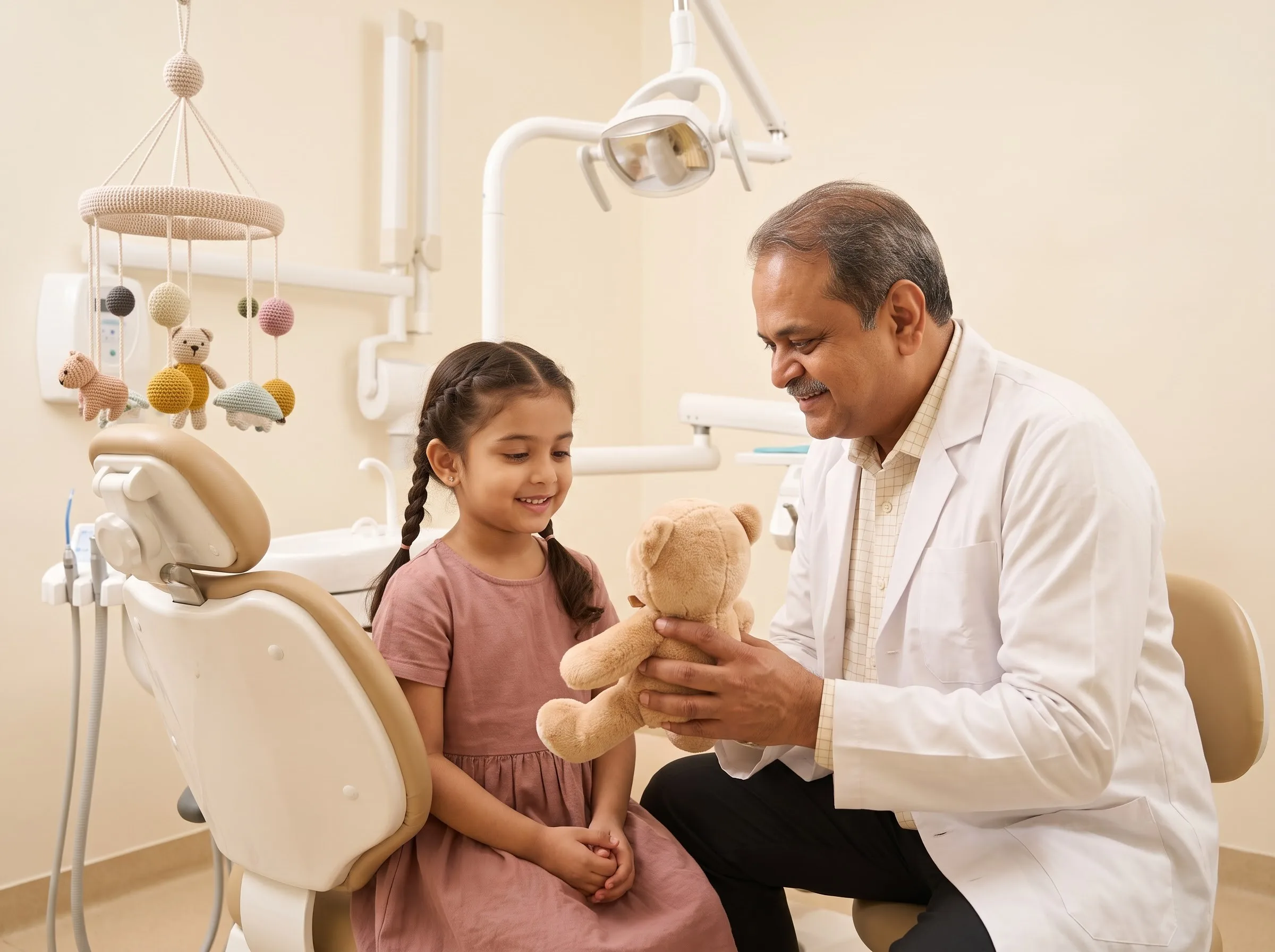
Pediatric endodontics treats problems inside a child’s tooth, including infected or inflamed pulp. Treatment may involve pulp therapy, root canal care or management of developing teeth.
The approach depends on whether the tooth is primary or permanent, its stage of development and the extent of disease. The aim is to treat the problem while preserving the tooth when possible.
- Persistent or recurring toothache
- Pain when chewing or biting
- Sensitivity to hot or cold
- Swelling around a tooth
Heading: When Might Your Child Need It?
A dental assessment may be needed if your child has any of these signs:
- A small gum boil near the tooth
- Deep decay reaching the pulp
- A tooth injured or fractured in an accident
- A permanent tooth with incomplete root development
Our Pediatric Endodontic Process
Examination & Diagnosis
We assess the tooth, symptoms, dental history and surrounding tissues. X-rays or other imaging may be used when clinically needed.
Assess Tooth Development
We determine whether the tooth is primary or permanent and assess its stage of root development before choosing treatment.
Choose the Treatment
Depending on the condition, treatment may include pulp therapy, root canal treatment or care for an immature tooth with an open root end.
Treat & Restore
The affected pulp is treated or removed as appropriate. The tooth is then sealed and restored to protect it and return useful function.
Review & Monitor
Follow-up helps assess the treated tooth, surrounding tissues and, where relevant, the continued development of an immature permanent tooth.
Benefits of Pediatric Endodontics
Preserves Natural Teeth
Treating a diseased tooth can help retain it rather than removing it when preservation is appropriate.
Treats Pulp Infection
Pulp therapy or root canal treatment can remove diseased tissue and address infection inside the tooth.
Supports Tooth Development
Selected treatments can help an immature permanent tooth continue developing when the pulp can be preserved.
Helps Manage Dental Trauma
Endodontic care can be used for certain injuries affecting the pulp or developing root of a child’s tooth.
Maintains Oral Function
Keeping a suitable primary or permanent tooth can help your child continue to eat and speak normally.
Protects Future Oral Health
Treating an affected tooth can help prevent an untreated dental problem from progressing.

Recovery & Aftercare
Some tenderness may occur after treatment, particularly when the tooth was already inflamed or infected. Your child may also notice mild sensitivity around the treated area.
Follow the instructions provided after treatment and encourage gentle, regular brushing. Depending on the restoration, your child may need to avoid hard or sticky foods for a short period. Attend follow-up visits as advised so the treated tooth can be monitored, especially when it is still developing.
Regular dental reviews help monitor the treated tooth and support your child’s changing oral health as they grow.
Why Choose Aurea Advanced Dentistry?
Dr. Kavita Rudagi is an MDS specialist in Conservative Dentistry & Endodontics and a Diplomate of the Indian Board of Endodontics. Pediatric endodontics is among her reported clinical focus areas.
Specialist Endodontic Care
Your child’s treatment is planned by Dr. Kavita Rudagi, a specialist in Conservative Dentistry & Endodontics.
Child-Specific Diagnosis
Treatment considers the child’s symptoms, the affected tooth and whether it is primary or still developing.
Care for Developing Teeth
Her reported endodontic focus includes management of open-apex cases and treatment approaches for developing permanent teeth.
Conservative Treatment Thinking
Where clinically appropriate, the focus is on managing disease while preserving as much healthy tooth structure as possible.