
Root Canal Retreatment in Ravet, Pune
What Is Root Canal Retreatment?
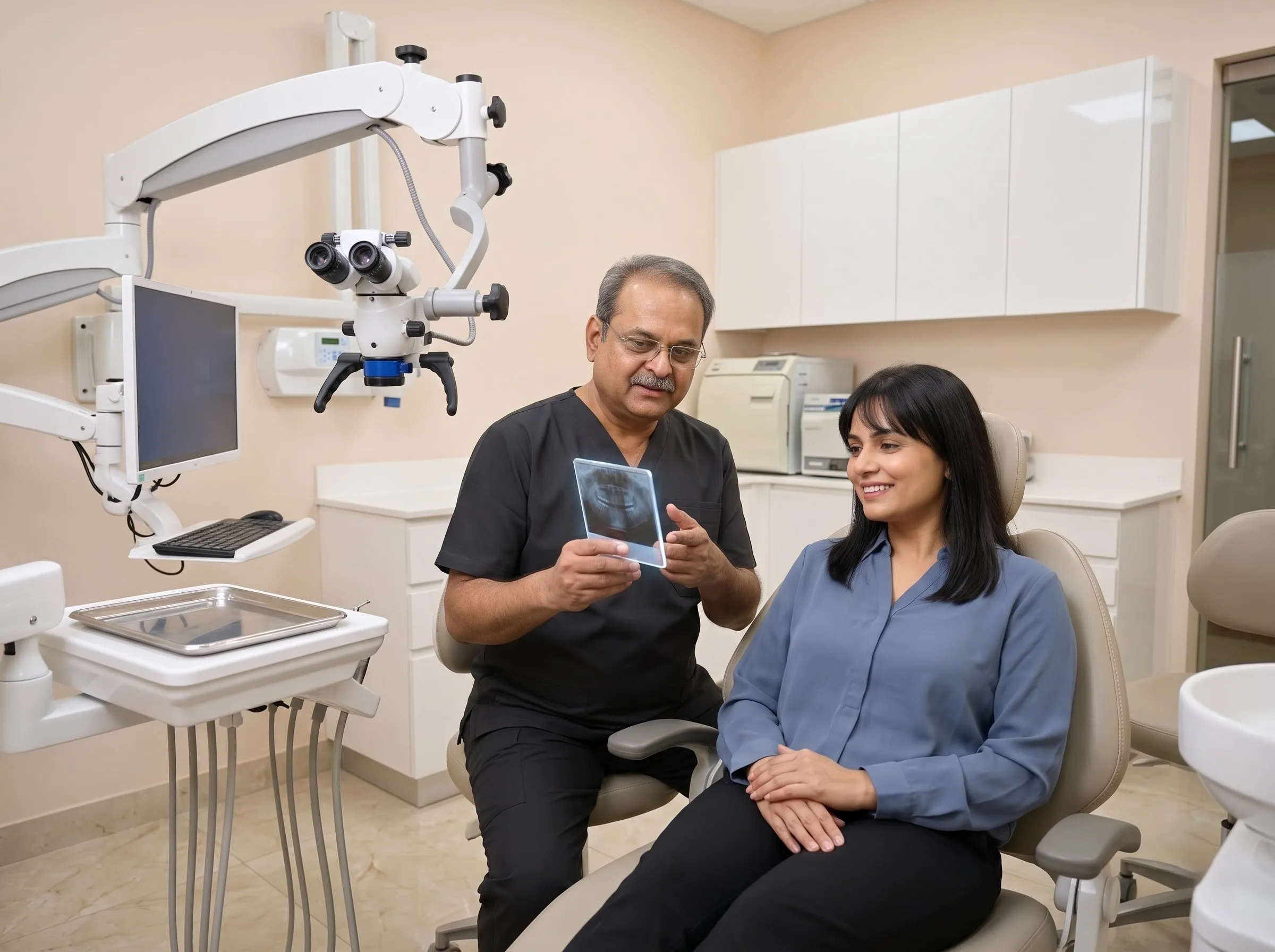
Root canal retreatment is a second procedure on a tooth that has already had a root canal. The canals are reopened, cleaned and treated again when infection or another problem persists.
The aim is to find and address the reason the first treatment has not healed as expected. In suitable cases, retreatment can help preserve the natural tooth.
- Pain or tenderness returns
- Pain when biting or chewing
- Swelling near the tooth
- A recurring gum boil or pimple
Signs You May Need Dental Implants
Dental implants may be the ideal solution if you are experiencing any of the following:
- An old root canal has not healed
- New infection around the root
- A filling or crown has leaked or failed
- Persistent discomfort after treatment
Our Root Canal Retreatment Process
Examine the Tooth
The tooth, previous treatment and surrounding tissues are assessed to understand why healing has not occurred as expected.
Find the Cause
Clinical findings and appropriate imaging help assess possible reasons for persistent disease or an unresolved problem.
Access the Canals
The existing restoration is accessed as needed so the treated canals can be reached and evaluated.
Clean and Treat
The canals are cleaned, disinfected and treated again. Complex cases may need additional care or more than one visit.
Protect the Tooth
After endodontic treatment, the tooth is restored appropriately. Follow-up may be advised to assess healing and care.
Benefits of Retreatment
When a tooth is suitable for retreatment, addressing the underlying problem may help control infection and preserve the natural tooth.
Preserve the Natural Tooth
Retreatment may offer a way to keep a restorable natural tooth rather than remove it.
Address Persistent Infection
Cleaning and treating the canals again can target infection that has remained or returned.
Improve Tooth Function
Keeping the tooth can help maintain normal chewing and the existing bite.
A Conservative Option
When clinically suitable, retreatment focuses on saving the existing tooth.
Investigate the Cause
The process looks for reasons the first treatment did not heal as expected.
Plan the Next Step
A careful assessment helps determine whether retreatment or another option is more appropriate.

Recovery & Aftercare
Some tenderness or sensitivity can occur after retreatment, particularly when the tooth and surrounding tissues have been inflamed. This usually settles as healing progresses.
Follow the instructions given after treatment and avoid chewing heavily on the treated tooth until it has been restored as advised. Take prescribed medicines only as directed. Keep scheduled follow-ups so healing can be reviewed and the final restoration can be planned or checked.
Retreatment is only one part of protecting the tooth. Good restoration, oral hygiene and appropriate follow-up all contribute to its ongoing care.
Why Choose Aurea Advanced Dentistry?
Dr. Kavita Rudagi is an endodontist with an MDS in Conservative Dentistry & Endodontics and Diplomate status with the Indian Board of Endodontics. Her focus includes retreatment and complex cases.
Endodontic Specialisation
Dr. Kavita Rudagi’s specialist training is directly aligned with root canal treatment, retreatment and tooth-preserving care.
Careful Case Assessment
Retreatment starts by understanding the tooth, the previous treatment and what may be preventing healing.
Microscope-Assisted Care
The supplied professional profile describes microscope-assisted endodontic treatment for suitable cases.
Clear Treatment Planning
You can discuss the findings, treatment options, expected visits and restoration needs before proceeding.
FAQs
Is root canal retreatment painful?
Local anaesthesia is used during treatment. Some tenderness may occur afterwards, especially if the area was already inflamed, but your dentist can advise you on managing discomfort.
How long does retreatment take?
It depends on the tooth, the reason for failure and how complex the canals are. Some cases may be completed in one visit, while others need multiple visits.
Am I suitable for root canal retreatment?
It depends on whether the tooth can be restored and what caused the earlier treatment to fail. An examination and appropriate imaging are needed before recommending retreatment.
What happens after root canal retreatment?
Some tenderness may occur for a few days. The tooth may need a suitable permanent restoration, and follow-up may be advised to assess healing.
Will the tooth last after retreatment?
The outlook depends on the condition of the tooth, the cause of the original problem, the quality of retreatment and the final restoration. Your dentist can discuss the prognosis for your case.