
Root Canal Treatment in Ravet, Pune
What Is Root Canal Treatment?
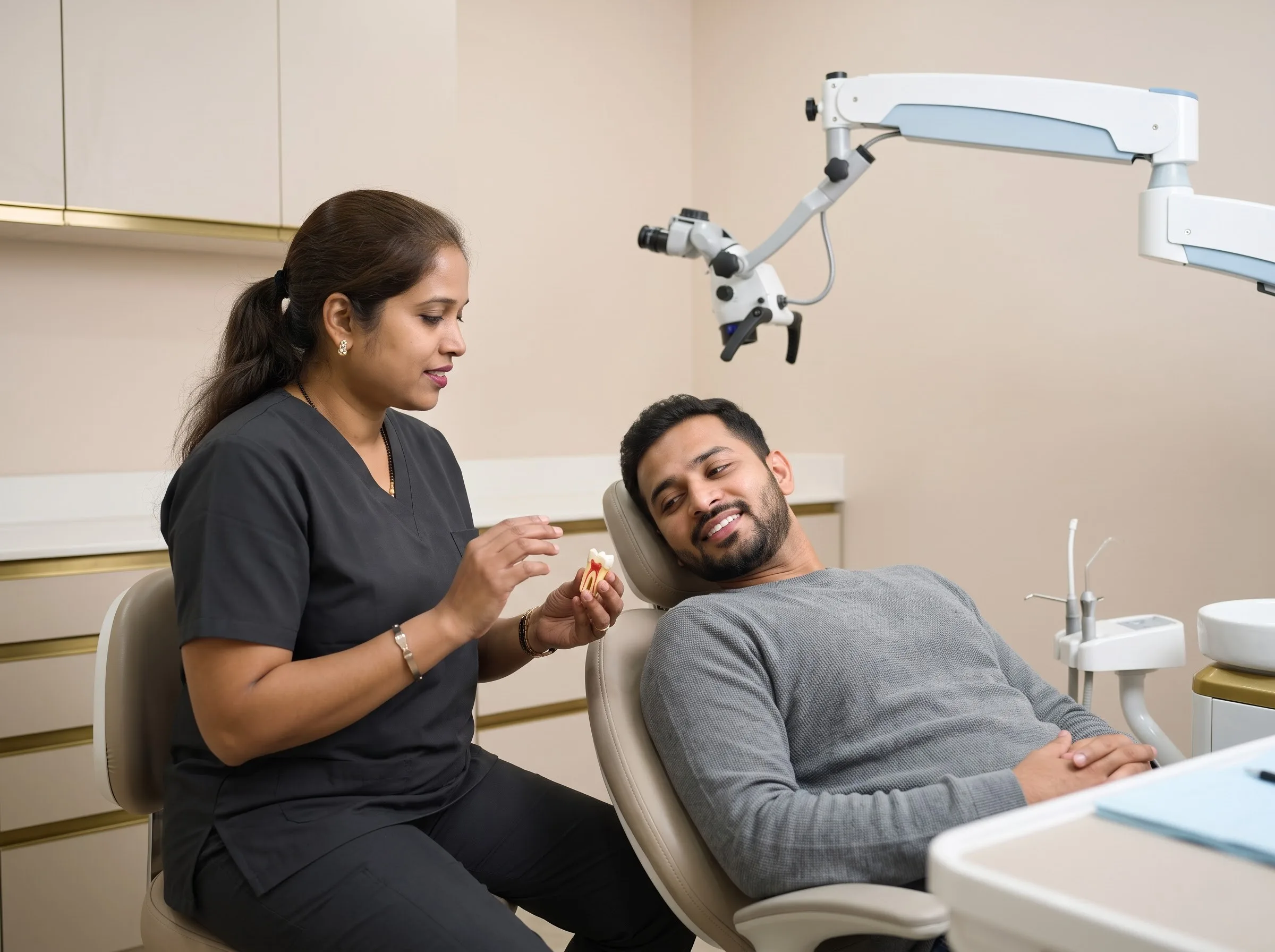
Root canal treatment removes infected or inflamed tissue from inside a tooth, then cleans, shapes and seals the space to help preserve the tooth.
It can relieve pain and protect a damaged tooth when the inner pulp is affected. Treatment may be completed in one or more visits, depending on the case.
- Persistent or recurring tooth pain
- Pain when biting or chewing
- Strong sensitivity to hot or cold
- Swelling around a tooth or gum
When Might You Need Root Canal Treatment?
You may need an assessment if you notice any of these signs:
- A deep cavity or damaged tooth
- Darkening or discolouration of a tooth
- An old root canal that remains painful
- A tooth with a crack or fracture
Your Root Canal Treatment Process
Understand the Problem
Your tooth is examined to understand the symptoms, condition and whether root canal treatment is appropriate.
Plan the Right Approach
The findings are discussed with you, including the expected visits and whether microscopy or other imaging is indicated.
Clean the Root Canals
The affected tissue is removed and the root canals are carefully cleaned and shaped.
Seal the Canals
The cleaned canals are sealed to help prevent further contamination and the tooth is prepared for restoration.
Restore the Tooth
The tooth is restored as advised, with follow-up planned according to your case and dental needs.
Benefits of Root Canal Treatment
The aim is to treat the source of infection or inflammation while preserving the natural tooth whenever it can reasonably be saved.
Preserve Your Natural Tooth
Root canal treatment can help retain a tooth that might otherwise need to be removed.
Relieve Tooth Pain
Treating the affected pulp can address the source of pain and sensitivity.
Restore Normal Function
Once the tooth is restored, it can return to everyday biting and chewing.
Protect Surrounding Teeth
Keeping a natural tooth can help maintain the surrounding dental structure.
Support Long-Term Oral Health
Timely treatment can help prevent an untreated tooth problem from progressing.
Address Difficult Cases
Specialist endodontic care can include retreatment and assessment of more complex root canal cases.
Recovery & Aftercare
Some tenderness or sensitivity may occur after treatment, particularly when the tooth has been inflamed. This usually settles as the area heals.
Follow the instructions given after your procedure and avoid chewing hard foods on the treated tooth until it has been restored as advised. Keep the area clean and attend recommended follow-ups. If pain, swelling or other symptoms persist or worsen, contact your dentist.
Good restoration and regular dental care help maintain the treated tooth over time. Follow-up will depend on the tooth and its condition.
Why Choose Aurea Advanced Dentistry?
Specialist Endodontic Care
Dr. Kavita Rudagi's specialist training is directly focused on conservative dentistry and endodontics, including root canal treatment.
Careful Case Assessment
Treatment is planned around the condition of the tooth, with attention to whether it can be preserved and what approach it needs.
Microscope-Assisted Treatment
Operating microscopes are reported among the clinic's clinical capabilities and may be used when appropriate for the case.
Single or Multiple Visits
Root canal treatment may be planned as a single-visit or multi-visit procedure depending on the tooth and its clinical needs.